
Blog
What is Cannabis Compliance? Understanding Its Importance

Oct
Cannabis compliance sounds like a maze of rules and paperwork at first glance. Yet more than 60 percent of businesses with solid compliance strategies actually cut their operational risks in half. Most folks expect red tape to slow everything down. But the real surprise is that those same regulations open doors to trust, safety, and real growth for anyone ready to play by the rules.
Table of Contents
- Defining Cannabis Compliance: What It Means
- The Importance of Cannabis Compliance in the Industry
- Key Regulations and Standards in Cannabis Compliance
- How Cannabis Compliance Affects Consumers and Retailers
Quick Summary
| Takeaway | Explanation |
|---|---|
| Adhere to Cannabis Regulatory Standards | Cannabis businesses must comply with specific government rules at all stages of product development. |
| Prioritize Consumer Safety and Transparency | Robust compliance ensures product testing, labeling, and quality control, empowering informed consumer choices. |
| Implement Comprehensive Tracking Systems | Track products from seed to sale to maintain accountability and ensure quality throughout production. |
| Invest in Staff Training and Education | Continuous training is essential for understanding and adapting to evolving regulatory requirements in the industry. |
| Build Consumer Trust for Long-term Success | Demonstrating commitment to compliance helps establish credibility and fosters consumer confidence in the cannabis market. |
Defining Cannabis Compliance: What It Means
Cannabis compliance represents a comprehensive regulatory framework designed to ensure legal, safe, and responsible production, distribution, and consumption of cannabis products. At its core, compliance encompasses a complex system of rules, standards, and protocols that cannabis businesses must adhere to protect public health, maintain product quality, and operate within legal boundaries.
The following table summarizes the fundamental components of cannabis compliance to provide a clear view of what businesses must address to remain legally and operationally sound.
| Component | Description |
|---|---|
| Product Safety & Quality Control | Enforces rigorous testing and quality checks at every stage of production |
| Accurate & Transparent Labeling | Requires precise product labels that inform consumers about ingredients, potency, and potential risks |
| Documentation of Processes | Mandates detailed recording of production steps and supply chain activities |
| State & Federal Regulation Adherence | Ensures all business operations align with relevant legal frameworks |
| Third-party Laboratory Testing | Demands independent lab testing for product verification and consumer safety |
The Fundamental Components of Cannabis Compliance
Understanding cannabis compliance requires examining its multifaceted nature. Regulatory compliance involves meeting specific government mandates that cover every stage of cannabis product development. These mandates include stringent requirements for licensing, product testing, packaging, labeling, marketing restrictions, and tracking product movement through seed-to-sale monitoring systems.
Key elements of cannabis compliance typically include:
- Product safety and quality control standards
- Accurate and transparent product labeling
- Precise documentation of production processes
- Compliance with state and federal regulations
- Rigorous third-party laboratory testing
Legal and Operational Significance
Cannabis compliance extends far beyond mere bureaucratic paperwork. According to National Cannabis Industry Association, compliance represents a critical mechanism for legitimizing the cannabis industry and building consumer trust. Businesses that consistently demonstrate commitment to regulatory standards not only avoid potential legal penalties but also establish credibility in a rapidly evolving market.
For cannabis businesses, compliance is not optional but a fundamental requirement for survival. This means implementing robust internal systems that can track, verify, and document every aspect of product creation and distribution. Read more about our guide on cannabis gummy compliance to understand how specific product categories require unique compliance strategies.
Successful cannabis compliance demands a proactive approach, where businesses anticipate regulatory changes, invest in comprehensive tracking technologies, and maintain meticulous records that demonstrate commitment to safety, transparency, and legal integrity.
The Importance of Cannabis Compliance in the Industry
Cannabis compliance represents more than a regulatory requirement. It is a critical foundation for establishing trust, ensuring consumer safety, and maintaining the legal and ethical integrity of the cannabis industry. As the market continues to evolve, businesses that prioritize comprehensive compliance strategies position themselves for sustainable growth and credibility.
Building Industry Legitimacy and Consumer Confidence
Regulatory compliance serves as a fundamental mechanism for transforming the cannabis industry from a marginalized market to a legitimate, professional sector. By implementing stringent quality control measures, transparent reporting, and adherence to government regulations, cannabis businesses demonstrate their commitment to responsible operations.
Key benefits of robust compliance include:
- Establishing consumer trust through transparent practices
- Minimizing legal risks and potential business disruptions
- Creating a standardized framework for product safety
- Protecting public health through rigorous quality standards
- Supporting long-term industry credibility and growth
Economic and Operational Risk Management
Beyond regulatory requirements, compliance plays a crucial role in economic sustainability. National Cannabis Industry Association research indicates that businesses with comprehensive compliance strategies reduce operational risks by up to 60%. Non-compliance can result in significant financial penalties, license revocation, and potential legal challenges that could permanently damage a company’s reputation.
Explore our comprehensive guide on CBD edible compliance to understand how strategic compliance approaches can transform business operations. Effective compliance management involves continuous monitoring, staff training, and proactive adaptation to evolving regulatory landscapes.
Successful cannabis businesses recognize that compliance is not a burden but an opportunity to differentiate themselves, demonstrate professionalism, and build lasting consumer relationships in an increasingly competitive market.

Key Regulations and Standards in Cannabis Compliance
Cannabis compliance regulations form a comprehensive framework that governs every aspect of cannabis production, distribution, and sale. These intricate standards are designed to protect public health, ensure product safety, and maintain the integrity of the cannabis industry through rigorous oversight and standardized protocols.
Licensing and Operational Requirements
Regulatory licensing represents the foundational layer of cannabis compliance. Businesses must navigate a complex process of obtaining and maintaining appropriate licenses that validate their legal right to operate. These licenses typically involve extensive background checks, financial disclosures, and demonstrated capability to meet stringent operational standards.
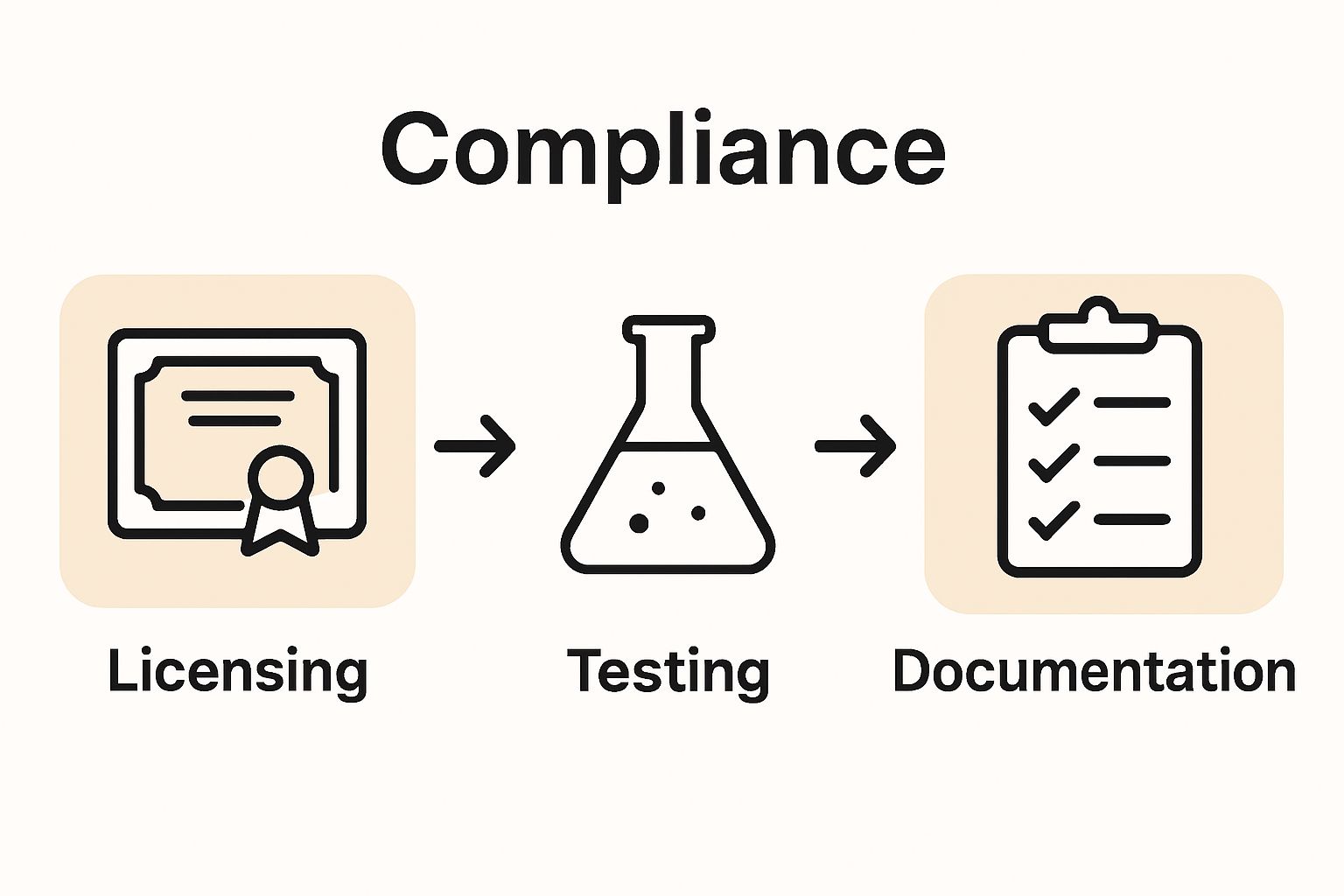
Key licensing components include:
- Detailed application processes
- Comprehensive background investigations
- Proof of financial stability
- Demonstration of secure facility infrastructure
- Ongoing compliance monitoring
Product Safety and Quality Control Standards
According to National Conference of State Legislatures, cannabis regulations mandate comprehensive safety protocols that cover every stage of product development. These standards encompass rigorous testing requirements, precise labeling guidelines, and strict quality control measures that ensure consumer protection.
Learn more about cannabis edible labeling requirements to understand the intricate details of product documentation. Compliance standards typically require businesses to maintain detailed records of product origin, cultivation methods, processing techniques, and laboratory testing results.
The most advanced compliance frameworks implement sophisticated tracking systems that monitor cannabis products from seed to sale, ensuring transparency and accountability throughout the entire production process. These systems help regulators and businesses maintain precise documentation, prevent diversion, and guarantee that only safe, legally produced products reach consumers.
How Cannabis Compliance Affects Consumers and Retailers
Cannabis compliance creates a comprehensive ecosystem that directly impacts both consumers and retailers, establishing a transparent and accountable marketplace that prioritizes safety, quality, and legal integrity.
This table outlines the main ways cannabis compliance benefits both consumers and retailers, making it easy to see how these regulations impact the industry on multiple levels.
| Stakeholder | Key Compliance Benefit | Explanation |
|---|---|---|
| Consumer | Enhanced Product Safety | Products undergo testing and clear labeling for composition, potency, and contaminants |
| Consumer | Informed Purchasing Decisions | Access to transparent information like potency, ingredients, and product origin |
| Retailer | Reduced Legal and Financial Risk | Avoids penalties, license loss, and reputational harm through demonstrated regulatory compliance |
| Retailer | Structured and Transparent Market Operations | Implements inventory tracking, regular audits, and clear documentation for legal integrity |
| Both | Increased Trust and Market Legitimacy | Strengthened credibility leads to sustainable industry growth |
Consumer Protection and Transparency
Consumer safety emerges as the primary benefit of robust cannabis compliance frameworks. By mandating rigorous testing, precise labeling, and strict quality control, compliance regulations empower consumers to make informed purchasing decisions. Detailed product information, including potency, ingredients, potential allergens, and origin, becomes readily accessible.
Key consumer benefits include:
- Guaranteed product safety through mandatory testing
- Clear understanding of product composition
- Protection from contaminated or substandard cannabis products
- Standardized dosage and potency information
- Transparent supply chain tracking
Retailer Operational Requirements
According to National Conference of State Legislatures, retailers face significant operational challenges in maintaining compliance. These challenges require substantial investments in tracking systems, staff training, documentation, and continuous regulatory education.
Learn more about cannabis edible labeling requirements to understand the complex documentation needed for legal cannabis sales. Retailers must implement sophisticated inventory management systems, conduct regular compliance audits, and maintain meticulous records demonstrating adherence to evolving regulatory standards.
By creating a structured, transparent marketplace, cannabis compliance ultimately builds trust between consumers, retailers, and regulatory bodies. This trust is fundamental to the continued legitimization and growth of the cannabis industry, ensuring that quality, safety, and legal integrity remain paramount.
Elevate Your Compliance Standards with Good Tide CBD Gummies
Are you worried about keeping up with cannabis compliance and making safe, informed choices? This article highlights just how vital accurate labeling, transparent sourcing, and strict product testing are for both consumer safety and business success. At Good Tide CBD Gummies, we hear your concerns and make compliance simple for you. Every gummy we craft is made with premium solventless hash rosin and undergoes rigorous third-party lab testing, helping you stay confident in your purchase and protected from the common risks outlined in regulatory frameworks.

Why settle for uncertainty or guesswork when you can experience edibles that are designed for full compliance and total peace of mind? Visit Good Tide CBD Gummies to explore our range, read detailed lab-tested product info, and see how our commitment to transparency links directly to the compliance priorities discussed in our guide to cannabis gummy compliance. Choose now to shop with confidence and be part of a community that puts safety, purity, and quality first.
Frequently Asked Questions
What is cannabis compliance?
Cannabis compliance refers to the regulatory framework ensuring legal, safe, and responsible production, distribution, and consumption of cannabis products, encompassing rules, standards, and protocols that businesses must follow.
Why is cannabis compliance important for businesses?
Cannabis compliance helps businesses avoid legal penalties, builds consumer trust, ensures product safety, and fosters industry credibility, which are crucial for survival and growth in a competitive market.
What are the key components of cannabis compliance?
Key components of cannabis compliance include product safety and quality control standards, accurate labeling, rigorous documentation, adherence to state and federal regulations, and third-party laboratory testing.
How does cannabis compliance affect consumers?
Cannabis compliance enhances consumer protection by ensuring product safety through mandatory testing, transparent labeling with detailed information on potency and ingredients, and preventing the sale of contaminated or substandard products.
Recommended
- Understanding Cannabis Gummy Compliance for Consumers – GOOD TIDE CBD GUMMIES
- Understanding CBD Edible Compliance Explained – GOOD TIDE CBD GUMMIES
- Understanding Cannabis Edible Labeling for Consumers – GOOD TIDE CBD GUMMIES
- Understanding Cannabis Edible Terminology Explained – GOOD TIDE CBD GUMMIES
